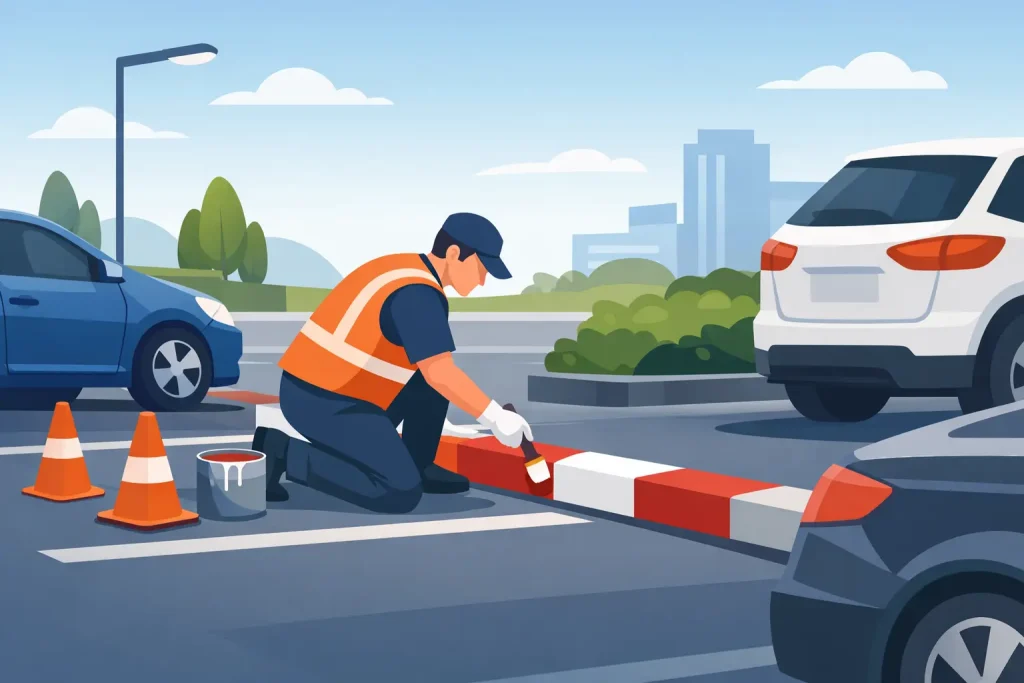
A faded curb does more than make a property look tired. It can create confusion at loading zones, weaken fire lane visibility, and make pedestrian areas harder to read at a glance. That is why parking lot curb painting matters on busy commercial sites. When curbs are painted clearly and maintained on schedule, drivers move with more confidence, tenants see a better-kept property, and managers have one less preventable liability issue to worry about.
For commercial properties across Houston, curb painting is not just a cosmetic add-on. It is part of a working traffic control system. The color, placement, durability, and timing all affect how well that system performs day to day.
What parking lot curb painting actually does
Most people notice striping first, but curbs carry a different kind of message. They define edges. They signal restrictions. They help drivers recognize where they can stop, where they cannot, and where extra caution is required. On active properties, that quick visual guidance matters.
Parking lot curb painting is commonly used to mark fire lanes, no-parking areas, loading zones, reserved spaces, and pedestrian-sensitive edges. In some cases, it also supports wayfinding around storefronts, medical offices, schools, and industrial facilities where vehicle movement needs to stay predictable.
A properly painted curb also improves visibility in low light and bad weather. In Houston, that matters more than many owners expect. Rain, glare, and heavy traffic can make pavement markings harder to see. Curbs with the right prep and coating help maintain clear visual boundaries when conditions are less than ideal.
Why curb painting gets overlooked until it becomes a problem
Curb painting is easy to postpone because deterioration happens gradually. The color fades. Tire scuffs build up. Edges chip. Before long, the curb is still technically there, but it is no longer doing its job clearly.
That creates small operational problems that can turn into larger ones. Drivers stop where they should not. Delivery vehicles block access. Fire lane markings lose their authority. Pedestrian areas feel less defined. If your property serves the public, those issues affect both safety and appearance.
For property managers, there is also the practical side. Deferred maintenance often costs more once the site starts needing corrective work instead of routine upkeep. A curb that could have been cleaned, prepped, and repainted may later need patching or more extensive surface repair before new paint can hold properly.
Where parking lot curb painting matters most
Not every curb on a property needs the same treatment. The priorities depend on traffic volume, tenant use, emergency access, and local code considerations. That is why a site walk matters before any paint is applied.
High-priority areas usually include fire lanes, building entrances, pickup and drop-off zones, ADA-adjacent paths of travel, loading areas, and tight corners where curb visibility helps prevent wheel impact. Retail centers often need a different approach than medical campuses or industrial sites. A shopping center may need stronger customer-facing direction, while a warehouse property may be more focused on truck circulation and protected access points.
There is also a difference between repainting what already exists and correcting a layout that was never clearly marked to begin with. In some cases, curb painting works best as part of a broader restriping or traffic-flow update. In others, a targeted repaint is enough to restore order and visibility without disrupting the whole lot.
Good curb painting starts before the paint
The part most people never see is the part that determines how long the job lasts. Surface preparation matters just as much as the coating itself. If dirt, chalking, loose debris, oil residue, or failing old paint are left in place, even good materials will struggle to bond.
A dependable contractor will evaluate curb condition first. That includes checking for cracking, spalling, impact damage, and moisture-related wear. Some curbs are ready for cleaning and coating. Others need repair or heavier prep before painting makes sense. Skipping that step may save time for a day, but it usually shortens the life of the finished work.
Material selection also matters. Houston properties deal with heat, UV exposure, heavy rain, and steady traffic. Not every product holds up the same way in those conditions. The right coating should be chosen based on curb type, use level, and expected wear, not just upfront cost.
Color, compliance, and consistency
Curb colors are not just decorative choices. They often communicate restrictions or designated uses, and those markings need to be consistent across the property. If one fire lane curb is bright and legible while another is faded or painted differently, the message weakens.
This is where experience helps. Commercial owners and managers should not have to guess whether a curb should be red, yellow, blue, or another color tied to site-specific use. The right plan depends on the property type, the jurisdiction, existing signage, and how the curb works with pavement striping and posted instructions.
It is also important to understand that curb painting alone does not create compliance in every situation. Some areas require coordinated markings, signage, wording, or layout adjustments to meet the practical and regulatory need. That is why isolated repainting can sometimes fall short. The paint may look fresh, but if the message on the ground is incomplete, the property still has a problem.
Timing the work to reduce disruption
On an active commercial property, scheduling matters almost as much as workmanship. Curb painting needs drying time, controlled access, and enough staging to keep vehicles and pedestrians out of the work zone. If that is not planned properly, a simple maintenance project can interfere with tenant operations or customer circulation.
The best approach depends on the site. Some properties are best handled in phases after business hours. Others have enough room to section off work during slower daytime windows. Medical offices, retail centers, industrial yards, and multi-tenant properties all have different traffic patterns, so the schedule should match the operation.
That flexibility is part of doing the job right. A contractor should be able to walk the site, identify conflict points, and build a work plan that protects both the finish and the client’s daily business.
How to tell when it is time to repaint
A curb does not need to be completely bare to justify repainting. In fact, waiting too long usually makes the project harder and more expensive. If the color has lost contrast, if the edge no longer reads clearly from a vehicle, or if the curb markings no longer match the rest of the site, it is time to take a closer look.
Another sign is when curb markings stop supporting the overall layout. You may have fresh stall striping but faded curbs, updated ADA markings next to worn edges, or clearly posted restrictions with curbs that no longer reinforce them. That mismatch makes the property feel less controlled and can confuse drivers.
For many commercial sites, curb painting should be reviewed as part of regular parking lot maintenance rather than treated as a one-off fix. The right cycle depends on traffic, weather exposure, and how critical those markings are to site safety.
What commercial clients should expect from the process
A professional curb painting project should start with a site review, not a guess. That review should identify what needs repainting, what may need repair, what colors and markings fit the site, and how the work will be staged. Clear pricing matters too. Property teams need to know what is included, what is being corrected, and whether related striping or signage issues should be handled at the same time.
From there, the work itself should be clean and controlled. Prep should be thorough. Lines and edges should look intentional, not rushed. Dry times and access restrictions should be communicated clearly so tenants, vendors, and visitors are not left figuring it out on the fly.
That is the standard Five Alarm Striping brings to curb painting and pavement marking projects across the Houston area. The goal is not just fresh color. It is a safer, clearer, more dependable parking environment that holds up under real use.
When your curbs are doing their job, most people will never think about them. That is usually the best outcome – clear guidance, cleaner traffic flow, and a property that looks cared for from the moment someone pulls in.