
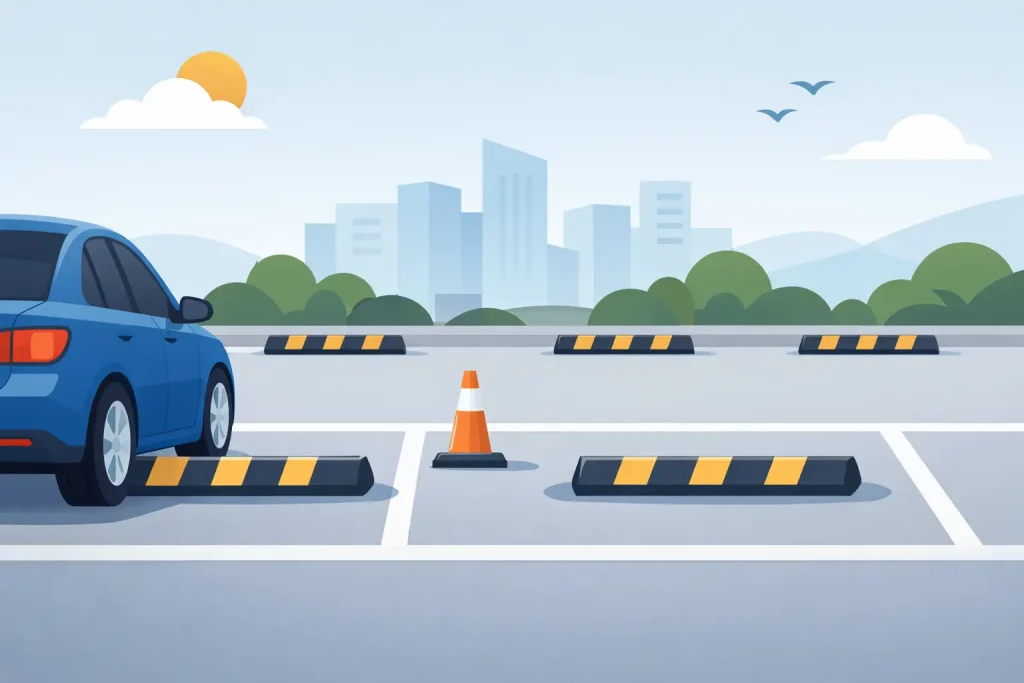
A wheel stop set a few inches off can create problems you feel every day – scuffed curbs, blocked sidewalks, damaged landscaping, awkward overhang, and drivers who never seem to land where the stall says they should. That is why wheel stop installation spacing matters more than many property owners expect. It is not just about dropping concrete at the head of a stall. It is about controlling where vehicles stop, protecting people and property, and making the lot work the way it was designed.
For commercial properties in Houston, spacing also has to account for real operating conditions. Oversized pickups, delivery traffic, tight circulation aisles, ADA access routes, and uneven pavement all affect where a wheel stop should go. Done right, the placement feels invisible because the lot functions smoothly. Done wrong, it becomes a daily maintenance issue.
What wheel stop installation spacing is really solving
The main job of a wheel stop is simple: keep a vehicle from rolling too far forward. But the spacing decision behind that simple function does several jobs at once. It protects buildings, curbs, fencing, sidewalks, landscaped islands, and utility equipment. It also helps maintain a consistent parking line so the lot looks orderly and vehicles do not intrude into pedestrian space.
That is why spacing should never be treated as one fixed measurement for every property. The right position depends on what sits in front of the stall, what types of vehicles use the lot, and how much overhang you can tolerate. A retail center may need a different approach than a medical office, industrial site, or apartment complex with heavy truck traffic.
Wheel stop installation spacing by context, not guesswork
A common field approach is to place the wheel stop a set distance back from the front of the parking space or curb line, but there is no one-size-fits-all number that works everywhere. A spacing that performs well in a standard passenger vehicle lot may be too aggressive for a site with lifted trucks, low-profile vehicles, or narrow pedestrian walkways.
In practical terms, the installer is balancing vehicle overhang against protection. Set the wheel stop too far forward, and longer vehicles may still project into sidewalks or landscape beds. Set it too far back, and the usable depth of the stall shrinks, which can create poor parking behavior and increase tire impact. The right choice comes from measuring the stall, reviewing the intended use, and checking what needs protection beyond the bumper line.
For many commercial lots, the question is less, “What is the universal spacing?” and more, “What spacing keeps vehicles where we need them on this site?” That distinction matters.
The vehicle mix changes the answer
Houston-area commercial lots often serve a wider vehicle mix than the original plans assumed. Half-ton pickups, work trucks, SUVs, and vans can all occupy standard stalls. If the lot mainly serves compact passenger vehicles, a more typical placement may work fine. If the lot sees trades, fleet vehicles, or service traffic, the wheel stop location may need adjustment so larger vehicles are controlled without creating constant tire contact or awkward parking angles.
This is one reason experienced layout planning matters. Wheel stop spacing is not a separate decision from striping, stall depth, drive aisle width, and curb location. It is part of the overall parking geometry.
What is in front of the stall matters just as much
If the front of the stall meets a standard curb and a landscaped island, spacing may be designed to limit bumper and tire intrusion into plant material. If the stall faces a sidewalk, spacing has to protect pedestrian clearance. If the stall faces a wall, storefront, fence, or equipment enclosure, the margin for error gets smaller.
In other words, the object being protected often drives the placement. A decorative mulch bed can tolerate some vehicle overhang. A sidewalk path or building face should not.
ADA and pedestrian access are part of the spacing decision
This is where wheel stop installation spacing gets more sensitive. On ADA-accessible routes, access aisles, and pedestrian pathways, wheel stops can help or hurt depending on placement. A stop that allows vehicle overhang into a required accessible path can create a real obstruction. A stop placed without considering door swing, wheelchair movement, or route continuity can turn a compliance issue into a liability issue.
That does not mean every accessible space needs the same wheel stop treatment. It means the placement should be reviewed against the stall layout, access aisle, sidewalk position, and route to the building. On some sites, wheel stops are useful for protecting accessible routes. On others, they need to be avoided or positioned very carefully because they can become tripping hazards or interfere with circulation.
The right answer depends on the full layout, not just the stall count. That is why site-specific review is worth doing before anchors go into the pavement.
Common spacing mistakes that create expensive headaches
The most common mistake is treating every row the same. Property managers sometimes inherit a lot where wheel stops were installed in a uniform line without checking curb offsets, walkway widths, or varying stall depths. It may look neat from a distance, but drivers quickly expose the flaws.
Another common problem is placing wheel stops based only on curb position rather than actual parking geometry. If the striping is off, the curb is irregular, or the asphalt edge varies, a visually straight install can still produce inconsistent stopping points from stall to stall.
There is also the issue of old conditions. Re-striping over a previously modified lot can leave behind layout conflicts – moved curbs, added sidewalks, patched asphalt, or revised ADA stalls. If the wheel stop placement follows the old footprint instead of the current plan, the lot may function worse after the upgrade than before.
Then there is anchor failure. Even perfect spacing will not hold up if the stop shifts, rocks, or cracks because it was installed on failing pavement or with poor fastening. Placement and installation quality go together.
How a professional crew determines the right spacing
A disciplined process starts with a site walk. Measurements come first: stall depth, curb location, sidewalk width, elevation changes, and the location of anything in front of the parking row that needs protection. Then the installer reviews the vehicle use. A shopping center with short-term customer parking may be handled differently than an office property with consistent commuter use or an industrial facility with work trucks.
From there, the spacing is coordinated with the striping plan. This is the part many people miss. Wheel stops should support the intended stall use, not fight against it. If the striping says one thing and the stop location forces another, drivers will tell you which one wins.
A good crew also checks pavement condition before installation. Weak asphalt, loose base, or heavily patched areas can affect anchoring and long-term performance. In some cases, the better decision is to repair or adjust the installation area first rather than force a quick fix that will fail early.
At Five Alarm Striping, that kind of planning is part of doing the job right the first time. Clean results matter, but so does making sure the lot works after the crew leaves.
When standard spacing is not the best choice
Some properties need custom wheel stop placement even if most of the lot follows a more typical pattern. End stalls near corners may need tighter control. Stalls facing storefront glass or equipment may need a more protective position. Lots with unusual grades may need adjustment because vehicle pitch changes bumper relationship and tire contact.
Older properties are another case where custom spacing often makes sense. Stall dimensions may not match modern expectations, and pedestrian routes may have been added after the original layout. A rigid install based on habit can create new problems fast.
This is also true when owners are trying to solve a specific issue, such as drivers overrunning a sidewalk, hitting a fence line, or damaging irrigation. The fix is not always “add more wheel stops.” Often it is a matter of placing them correctly, and only where they actually improve control.
Why spacing affects appearance, maintenance, and liability
A well-spaced wheel stop does more than stop tires. It supports a cleaner-looking property because vehicles sit consistently in their stalls. That improves curb appeal and helps the lot read as organized and maintained. For retail, medical, and office properties, that visual order matters.
It also affects maintenance. If vehicles constantly overhang into mulch, curbs, or walks, crews spend more time repairing damage and cleaning up preventable wear. Good placement reduces repeat problems.
And from a risk standpoint, spacing decisions can either protect pedestrian areas or create encroachments that should never have happened. That is a practical issue, not just a technical one. Property owners are responsible for how their parking areas function in real use.
If you are evaluating wheel stop placement, the best move is to look beyond a standard measurement and ask what the site actually needs. The right spacing is the one that protects the property, supports traffic flow, respects accessibility, and holds up under daily use. When those pieces line up, the parking lot works quietly – which is exactly what you want.