A fire lane usually gets attention only when something goes wrong – an inspection notice, a tenant complaint, or an emergency vehicle that needs a clear path now, not after someone moves a truck. That is why a solid guide to fire lane compliance matters for commercial property owners and managers. It is not just about fresh red paint. It is about access, liability, and making sure your site works the way first responders expect it to.
For Houston-area properties, fire lane compliance can get complicated fast. Local requirements, site layout, traffic volume, faded striping, missing signs, and past patchwork repairs all affect whether a fire lane is actually doing its job. The goal is simple: make emergency access obvious, enforceable, and durable enough to hold up in real operating conditions.
What fire lane compliance really means
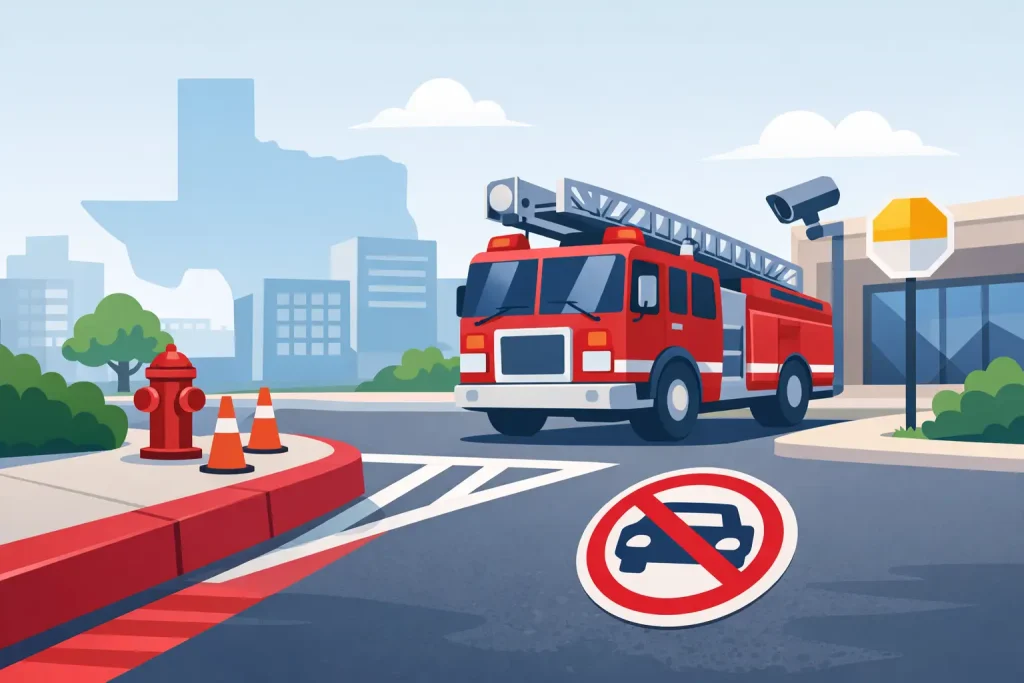
At a practical level, fire lane compliance means designated emergency access areas are marked clearly and kept unobstructed so fire apparatus can reach the building when seconds count. That includes pavement markings, curb markings where required, signage, and the physical clearance needed for emergency vehicles to pass and stage.
The part many property teams miss is that compliance is not just a striping issue. It is a site-function issue. A fire lane can be painted correctly and still fail in the field if dumpsters drift into the path, delivery vehicles idle in the wrong spot, or resurfacing work buries key markings. A compliant-looking lot is not always a compliant lot.
That is why the best approach starts with the entire circulation pattern. Entry points, turning radiuses, loading behavior, tenant traffic, and building access all shape how fire lane markings should be planned and maintained.
A practical guide to fire lane compliance
Most commercial owners do not need to memorize every code section. They do need to know what to verify before striping starts and what to maintain after the work is done.
The first step is confirming what standard applies to your property. Fire lane rules can vary by municipality, fire marshal jurisdiction, and property type. A retail center in one city may have slightly different marking or signage expectations than an industrial site in another. If you manage multiple locations across Greater Houston, assuming they all follow the same pattern is where expensive rework begins.
The second step is evaluating the current condition of the site. Faded paint, missing stencils, inconsistent curb color, and damaged signs are obvious issues, but layout conflicts are just as common. We often see fire lanes squeezed by added wheel stops, informal tenant parking habits, or later property modifications that changed traffic flow without updating markings.
The third step is making sure the work is documented and executed clearly. Property managers need more than a crew that paints red lines. They need a scope that identifies what is being marked, how it will be labeled, where signs belong, and whether the rest of the lot layout supports emergency access. That upfront planning reduces surprises during inspection and helps the property stay consistent over time.
Markings, signs, and visibility
A fire lane has to be easy to recognize from a moving vehicle and from ground level. That sounds basic, but visibility problems are one of the main reasons sites fall out of compliance. Sun exposure, standing water, heavy traffic, and old pavement can all reduce contrast faster than expected, especially in Houston conditions.
Pavement markings usually carry the most day-to-day visibility burden. If lettering is too small, too worn, or placed inconsistently, drivers ignore it. If curb painting is chipped or interrupted, the lane starts reading like ordinary edge paint instead of a restricted emergency area. Signs matter too, especially when parked vehicles block the pavement message.
There is a trade-off here. Some owners want the minimum necessary marking so the lot looks cleaner. Others want heavy visual treatment everywhere. Neither extreme is always right. Too little marking invites confusion. Too much can clutter the site and compete with ADA stalls, directional arrows, loading areas, and tenant-specific controls. The best result is a fire lane plan that is obvious without making the lot feel chaotic.
Common reasons properties fall out of compliance
Fire lane problems are often maintenance problems in disguise. The site may have been compliant when it was built or re-striped, then slowly drifted away from that standard.
Sealcoating and resurfacing are frequent culprits. If fire lane markings are not reinstalled promptly and accurately, the property can spend days or weeks with incomplete emergency access markings. The same thing happens after concrete work, utility cuts, or curb replacement. Small repairs can interrupt a fire lane enough to create inspection issues.
Another common problem is operational drift. Tenants start using the curb as a short-term pickup zone. Vendors stage equipment near rear access doors. Overflow parking spills into striped no-parking space during peak hours. These patterns may seem manageable until a fire marshal notices them or an actual emergency exposes the risk.
Then there is inconsistency. A property adds a new building pad, updates ADA stalls, or restripes a section after pavement repair, but the fire lane treatment no longer matches across the site. That inconsistency makes enforcement harder and creates doubt about what is restricted and what is not.
How inspections usually go wrong
Inspections rarely become a problem because a property manager does not care. They become a problem because responsibility is fragmented. One vendor handled paving. Another added signs. A maintenance team touched up curbs. Nobody checked whether the final result worked as one system.
This is where a site walk matters. Before any fire lane work is priced or scheduled, the property should be reviewed as it actually operates, not just as it appears on an old plan set. Delivery patterns, trash enclosure access, tenant turnover, medical or industrial use, and after-hours parking all affect what the inspector will see.
It also helps to think beyond passing one visit. If your lot barely meets the standard the day it is painted, it may not stay there long. Material quality, stencil placement, traffic wear, and drainage all affect how long markings remain readable. A lower upfront price can become expensive if the lane needs early touch-ups or correction.
Fire lane compliance and liability
A guide to fire lane compliance is really a guide to risk control. If emergency access is blocked, unclear, or poorly maintained, the exposure goes beyond a failed inspection. It can affect incident response, tenant safety, and the defensibility of the property’s maintenance practices.
For owners and managers, that matters in practical terms. A neglected fire lane can trigger complaints from tenants, create friction with local authorities, and raise questions after an incident about what the property knew and when it acted. Good striping does not eliminate liability by itself, but poor markings can make a bad situation harder to explain.
That is why dependable documentation and repeatable maintenance matter. When a property has a clear record of site review, updated markings, and ongoing upkeep, it is in a better position operationally and administratively.
What to look for in a striping partner
Not every striping contractor approaches fire lanes with the same level of care. For commercial properties, the right partner should understand more than paint application. They should be able to review layout conditions, flag conflicts, and explain where markings, curb treatment, and signs need to work together.
You also want a contractor who understands live-site scheduling. Many retail, medical, and industrial properties cannot shut down normal traffic for long. Phasing, tenant access, and clean jobsite management matter just as much as line quality. Work done right the first time reduces disruption and keeps the property from cycling through avoidable corrections.
In the Houston market, local experience counts. Pavement conditions, weather, drainage patterns, and municipal expectations all shape how fire lane work performs over time. A company like Five Alarm Striping brings value when it can connect code-conscious planning with durable execution and a realistic view of how the lot is actually used.
Keeping compliant after the paint dries
Fire lane compliance is not a one-time project. It is part of parking lot maintenance. Once the markings are in place, the property needs periodic review to catch fading, sign damage, curb wear, and usage issues before they become larger problems.
For most sites, the smart move is to check fire lanes whenever you review ADA markings, directional controls, or general pavement condition. That keeps compliance from slipping to the bottom of the list until an inspection forces urgent action. It also helps owners budget for touch-ups and re-striping on a planned schedule instead of reacting under pressure.
If there is one rule worth keeping in front of your team, it is this: a fire lane is only doing its job when it is visible, unobstructed, and treated like critical access space every day. When you plan it carefully and maintain it with discipline, you are not just checking a box. You are protecting the people who use the property and giving first responders the access they may need without warning.